
How is Bamboo Plywood Made?
1.Raw Material
All our products are made of bamboo Mao (Maozhu or moso bamboo) which is high construction strength and flexibility than most of wood. Our all kinds of bamboo boards, with 6 years old of fine natural bamboo. If the bamboo younger, the hardness isn’t strong enough. And if order, the bamboo is easy to break and the less flexible.
2. Splitting Bamboo Poles
The bamboo poles are placed in a special machine which converts them into rough bamboo strips. The poles are pushed through a metal “splitter” (knives in star shape) until the entire stem is cut into strips.
3. Planing Strips for Further Production
The bamboo strips are initially still very irregular in shape and structure. To eliminate their green outer skin and internal nodes, the strips are planed in the standard dimensions 22 x 6 mm.
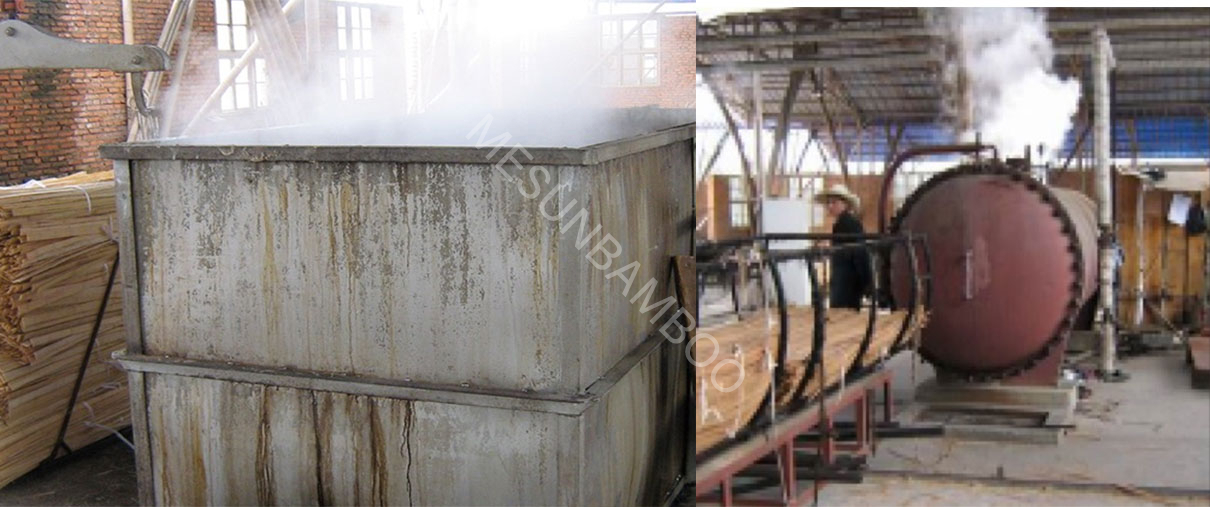
4. Boiling / Carbonizing the Strips
All natural color bamboo strips are boiled for 2 hours in 100℃ water which will remove the sugar and also eliminate the mosquitoes and bacteria over time. If we do carbonized color paneling, the strips are carbonized in higher temperature and high pressure furnace. The carbonized time depends on the panel our customers demand(light, medium or dark).
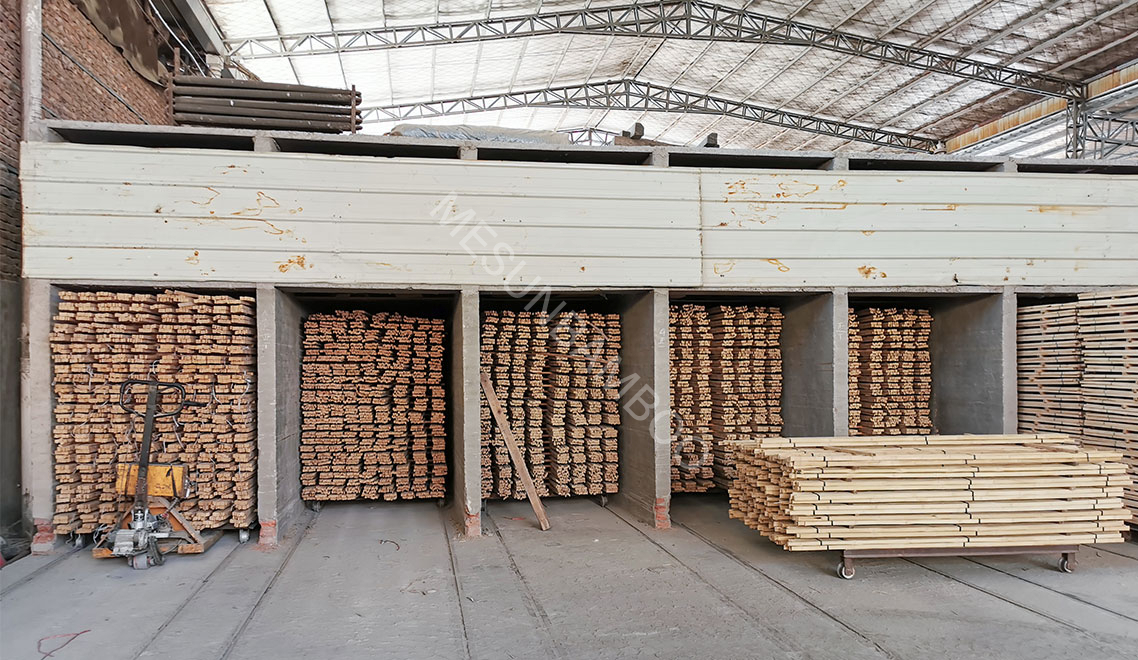
5. Kiln Dry
The bamboo strips will be put on the kiln drying to the excepted moisture content. Due to different countries requirement of moisture, we will carefully control the time and temperature. Normally the moisture is about 15-18%.
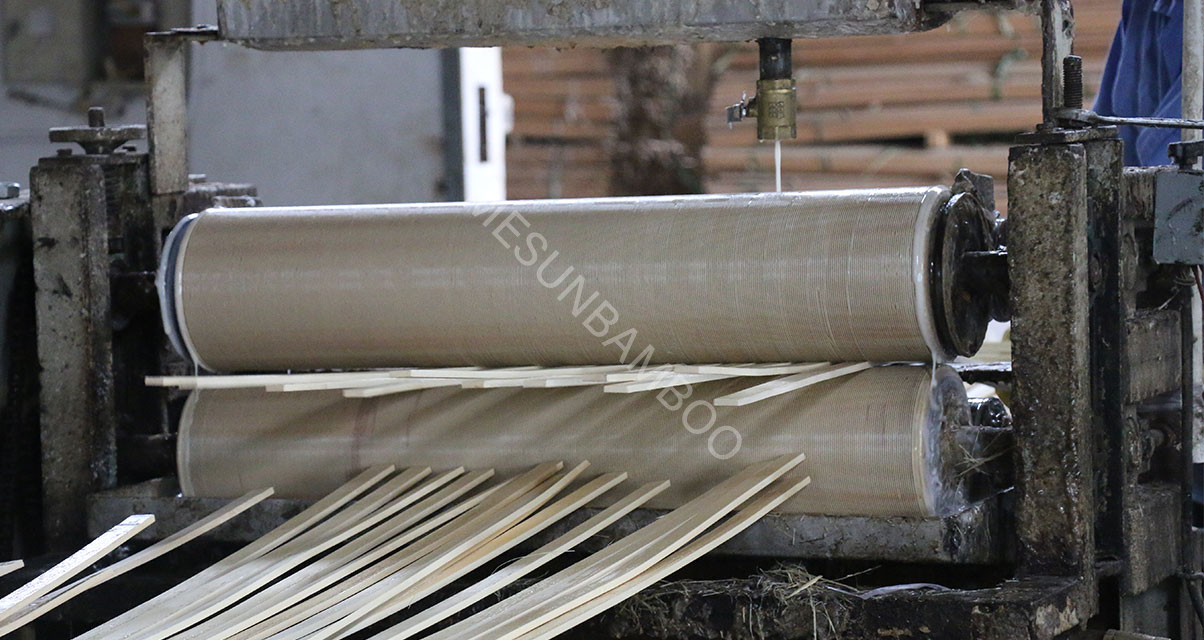
6. Sanding the Strips to Ensure Accurate Size
A secondary sanding process is performed to eliminate any residual yellow or green bamboo skin remaining after the first sanding stage. The strips are then precision-sanded to the required dimensions, ensuring accurate sizing, a smooth finish, and consistent quality throughout the batch.
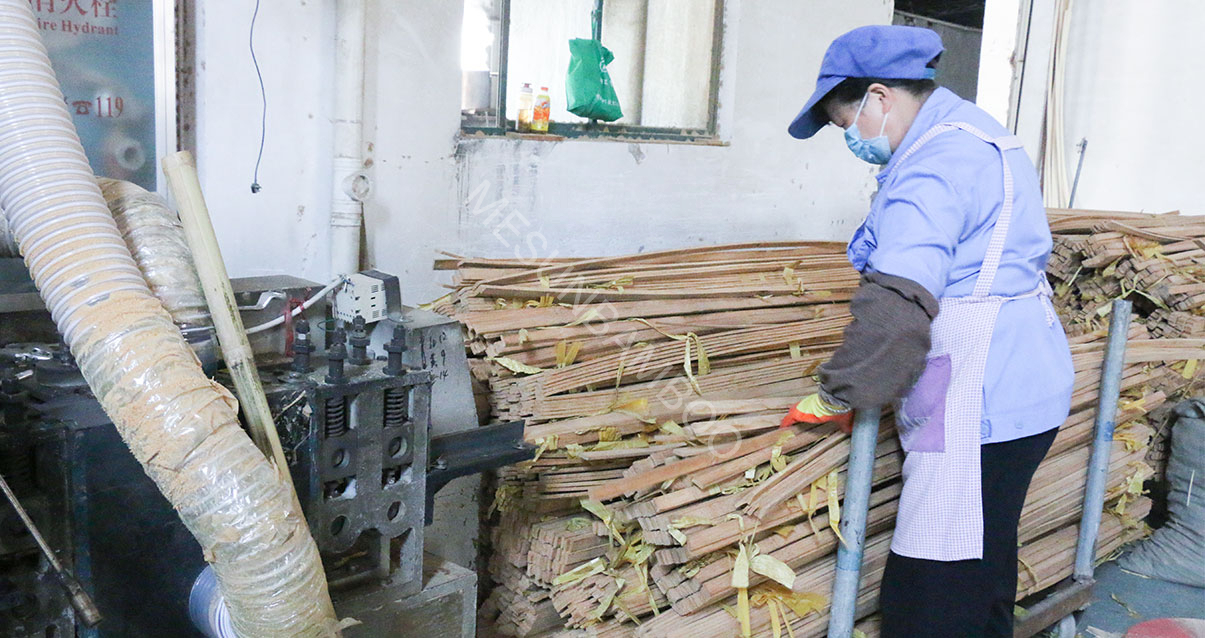
7. Selecting & Matching Color of Strips
The bamboo strips are carefully inspected and sorted into different grades. Our experienced workers examine each strip individually, removing any defects to ensure consistent quality. This meticulous selection process also helps maintain uniform color and appearance, resulting in high-quality bamboo products with a refined and consistent finish.
8. Gluing
Gluing the strips with non-formaldehy glue according to the press style to get the European standard E0.
9. Hot Press
Horizontal panel the bamboo strips are pressed together facing up. This results in a 1-ply where the pattern and characteristic of the bamboo nodes are clearly visible. Side pressed bamboo plywood has a thickness of 20 mm. In order to make thicker panels or beams, several layers are glued together.
Hot Press Vertical Bamboo Plywood
Hot Press Horizontal Bamboo Plywood
10. Selecting & Matching Color of Bamboo Boards
Before laminated, our QC will strictly check the surfaces of bamboo panels to ensure that every panel we supply have good quality and uniform color.
11. Laminating Bamboo Plywood
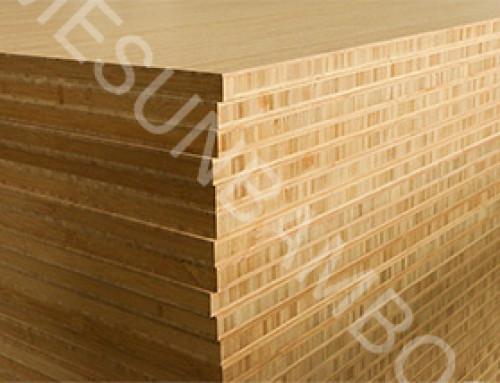
Glue the boards and hot pressed, according to customer requirements. Noramlly our bamboo plywood has a cross structure that both ensure the stability and beauty of bamboo plywood.

12. Acclimatisation
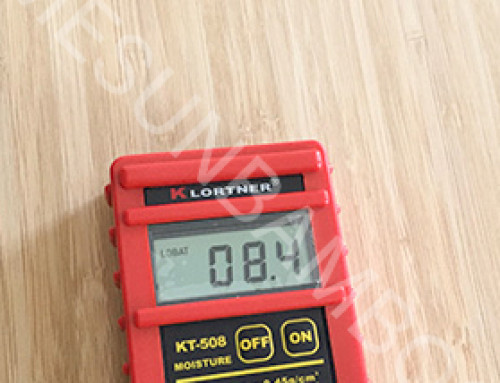
Normally we’ll put the plywood for about 7 days to wait for the material to acclimate to its surroundings. The water moisture of bamboo plywood is controlled at 6%-10%.
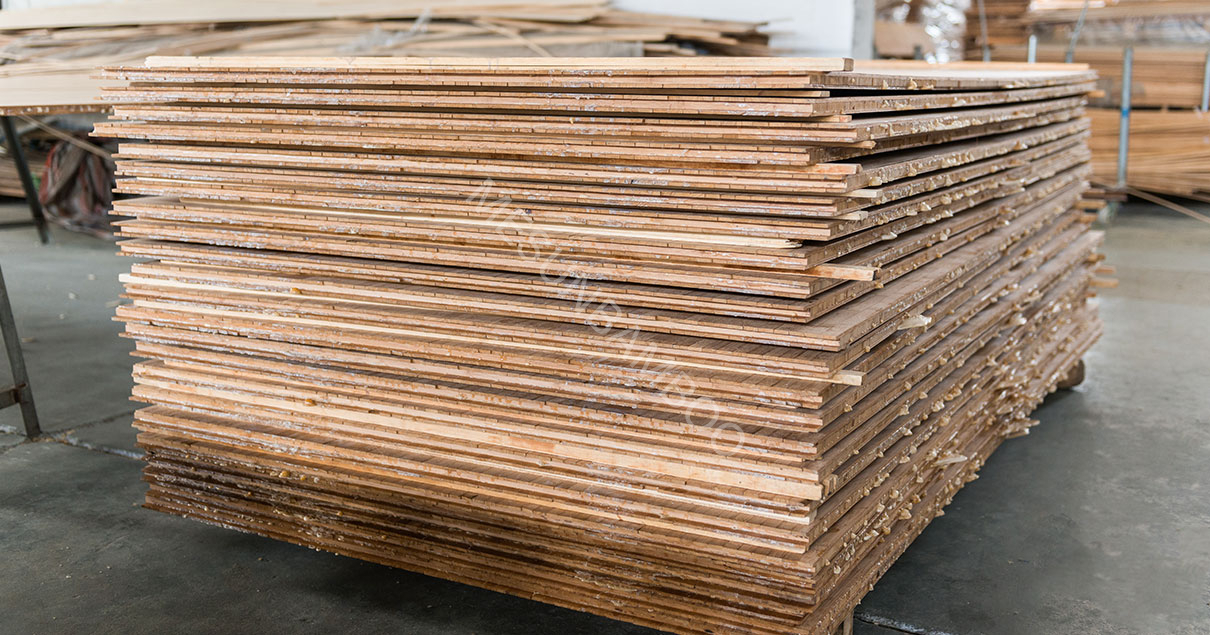
13. Cutting to Size
Using saw cut the 4 sides of bamboo plywood to get the required length and width. Normally is 1220*2440mm (4’x8′). The sizes are available for custom.
Set the Length of Bamboo Plywood
Set the Width of Bamboo Plywood
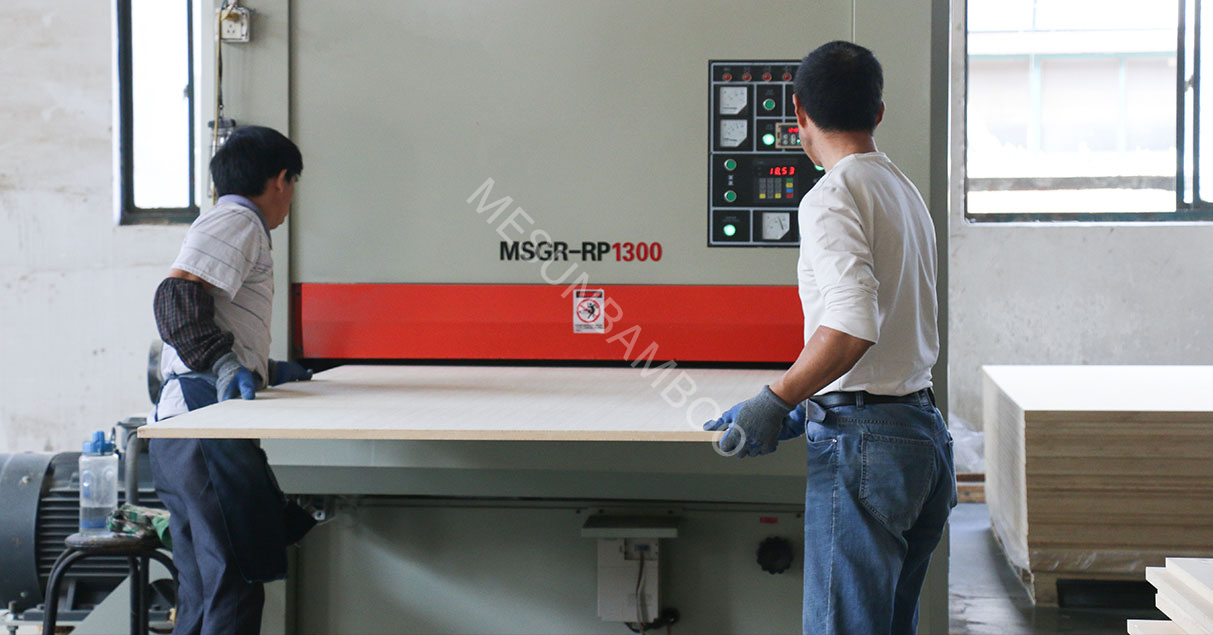
14.Sanding the Bamboo Plywood
Sanding is the final step in the production process to accomplish a perfect bamboo plywood. Normally using 150 grid sandpaper. Other grid is also possible. The thickness of bamboo plywood is 3mm, 4mm, 5mm, 6mm, 7mm, 9mm, 12mm, 15mm, 16mm, 18mm, 19mm, 20mm, 25mm, 30mm, 35mm, 40mm, 45mm, 50mm etc. Welcome to cutomize the thickness to meet your needs.
15. Strictly Quality Control
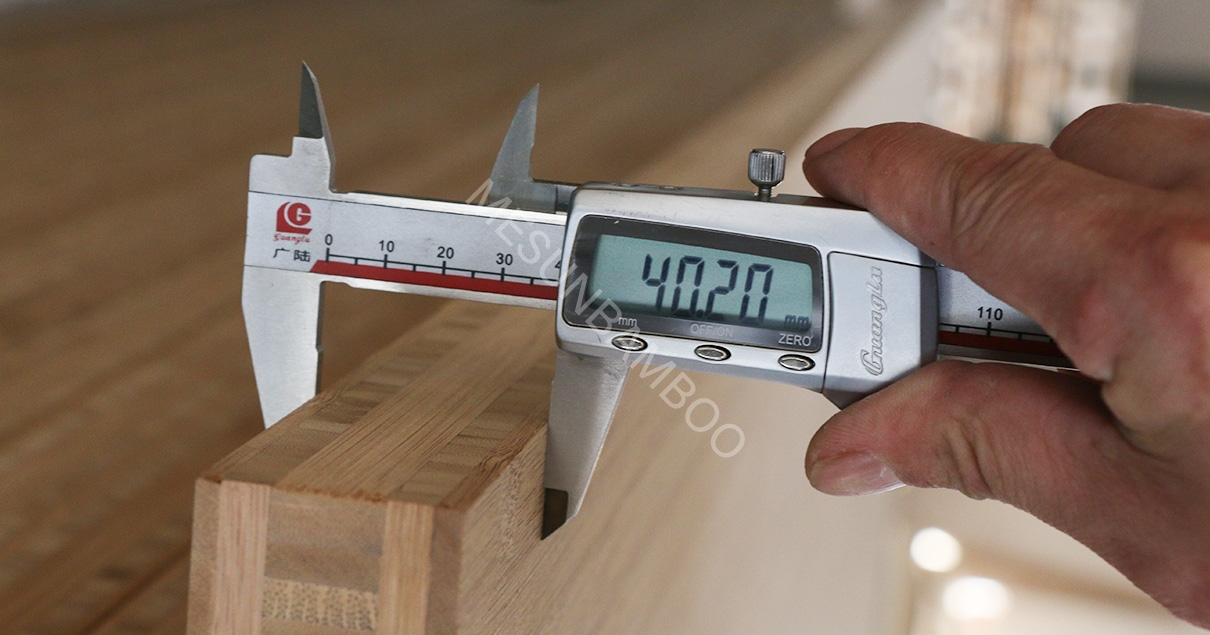
Quality is our top priority. Before packaging, every bamboo plywood undergoes a comprehensive inspection by our experienced QC team. We carefully verify dimensions, moisture content, flatness, color uniformity, surface finish, edge quality, and any potential defects. To further ensure excellence, each panel is rechecked during the packing process. This double-inspection procedure allows us to deliver bamboo products that meet the highest standards of quality, consistency, and craftsmanship.
Welcome to leave a message to inqiury or tell us your ideas!
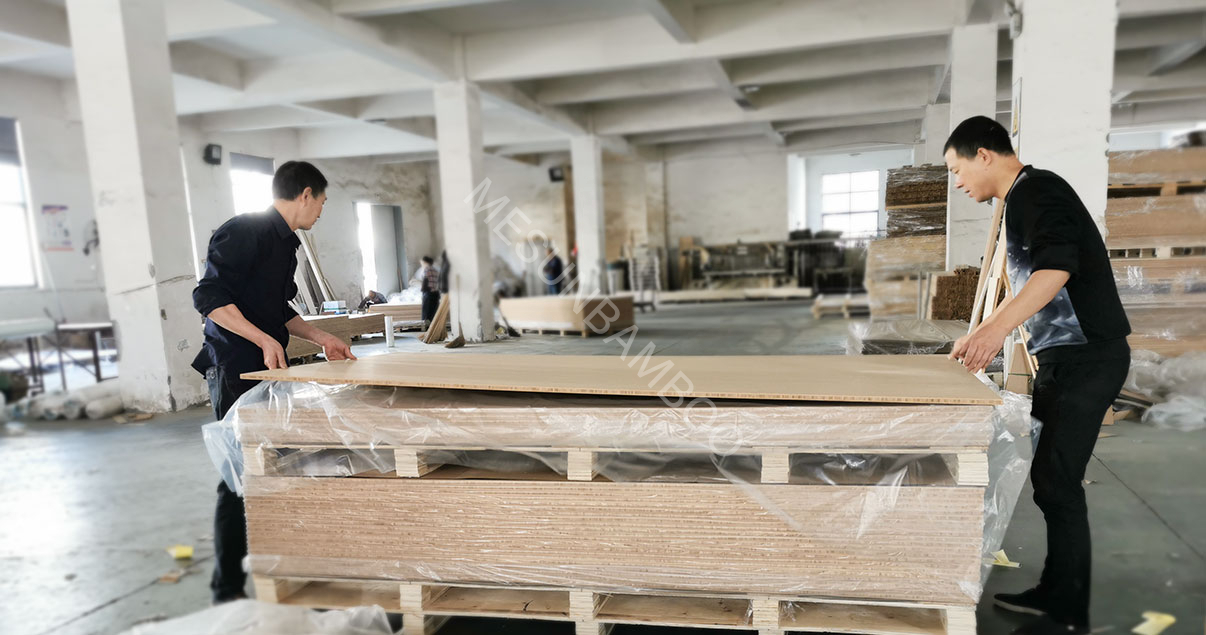
16.Packing & Loading
We wrap the bamboo plywood with PP and card boards on the outside, loaded on the plywood pallets. For different request, the package, pallet can be different like fumigation free pallet. After confirmed the shipment, our worker will load the containers in time.

 English
  Español
  Deutsch (Sie)
  Français
  Nederlands (Formeel)
  Italiano
  Русский
  日本語
日本語  Polski
  Nederlands (België)
  العربية
  Suomi
Suomi  Dansk
Dansk  Tiếng Việt
  Português
  Türkçe
  Bahasa Indonesia
  Slovenčina
  Українська
Leave A Comment